House Clearance Sutton: Recycling & Sustainability Commitment
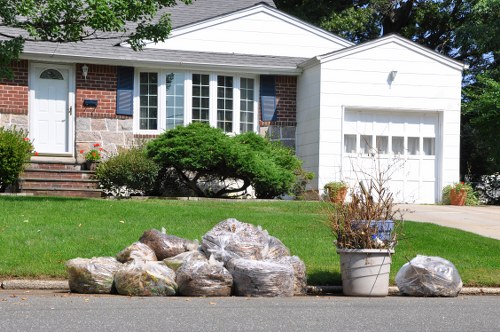 House Clearance Sutton is committed to delivering responsible, eco-conscious clearances across the borough. Our sutton house clearance approach focuses on maximising reuse and minimising landfill through clear operational standards for every job. We balance practical clearance work with robust environmental stewardship, ensuring that every item collected is assessed for donation, repair, refurbishment or recycling. By emphasising an eco-friendly waste disposal area mindset, our teams reduce the carbon footprint of removals while supporting local circular economy activities.
Recycling Targets and Measurable Goals
We set a clear recycling percentage target for all Sutton clearance operations: a minimum of 75% diversion from landfill within three years, with incremental targets of 60% in year one and 70% in year two. These goals are aligned with local borough ambitions for waste reduction and the drive toward a sustainable rubbish area across the community. Our reporting framework tracks reuse, recycling, and energy recovery so that progress is transparent and verifiable. Setting ambitious but realistic targets helps guide staff training, vehicle loading practices, and partnerships that prioritise recovery over disposal.
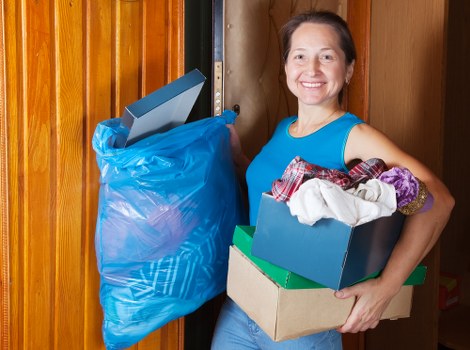 We work directly with local transfer stations and household waste sites to ensure items are processed correctly. Typical transfer hubs serving the area include the borough household waste site, nearby municipal transfer stations and regional resource recovery centres. Familiarity with local infrastructure—such as the recycling streams used by the borough for glass, paper, plastics and food waste—means we can sort on-site to match municipal separation rules and ensure materials go to the correct downstream processor.
Partnerships with Charities and Reuse Networks
Partnerships with charities are central to our Sutton house clearance strategy. We collaborate with national and local organisations—charity shops, furniture reuse social enterprises, and homelessness support groups—to redirect serviceable goods. Items such as sofas, beds, working appliances and textiles are prioritised for donation. Our link-ups include chains that can accept larger furniture and smaller community groups that benefit from local collections. By integrating donations into our workflow, we reduce waste volumes and support community welfare.
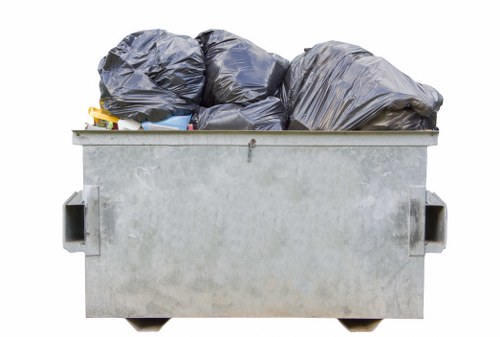 Our reuse-first policy means many items that once would have been thrown away are now given a second life. In practice this means sorting at the property, labelling furniture and appliances for donation, and coordinating drop-offs at charity partners or reuse centres. Where refurbishment is required, we route items to repair workshops that specialise in electrical testing, upholstery and furniture restoration. This reduces the need for new products and builds a sustainable rubbish area ethos within Sutton.
We also maintain clear procedures for items that cannot be reused. Hazardous materials, electronics and certain textiles are separated and taken to specialist processors at transfer stations so that components and materials are recovered safely. Waste separation practices reflect the borough's approach—food waste, glass, mixed recycling, paper and textiles are handled according to council guidance to keep contamination low and recycling streams efficient.
To support the low-carbon transition, our Sutton clearance fleet increasingly uses low-carbon vans and logistics technology. Vehicles include electric vans for short urban runs and hybrid or low-emission diesel alternatives for heavier loads, combined with route optimisation software to reduce miles and idle time. Low-carbon vans aren’t just a badge; they are part of a measured strategy to reduce operational emissions, cut local air pollution and lower fuel costs while maintaining reliable collection schedules.
 Building a sustainable rubbish area also requires transparent measurement and regular review. We publish internal performance metrics and share anonymised diversion rates with partner charities and transfer stations to improve coordination. Staff receive training on waste hierarchy principles—refuse, reduce, reuse, recycle—and specific sorting techniques that mirror the borough’s curbside and hub sorting rules. This ensures that when items enter local waste systems they are clean, clearly separated and ready for efficient processing.
 Community engagement is key: we host occasional drop-off days and collaborate on local reuse fairs with community groups to maximise the life of household goods. Our commitment to an eco-friendly waste disposal area and a truly sustainable rubbish area in Sutton is ongoing. By combining ambitious recycling percentage targets, active partnerships with charities, responsible use of local transfer stations and a modern low-carbon fleet, our services aim to protect resources, support vulnerable people and keep the borough greener for future generations.
- Key actions: Prioritise reuse and donations over disposal.
- Infrastructure use: Route materials to appropriate local transfer stations.
- Fleet strategy: Use electric and low-emission vans with route optimisation.
- Measurement: Track recycling percentage targets and report progress.